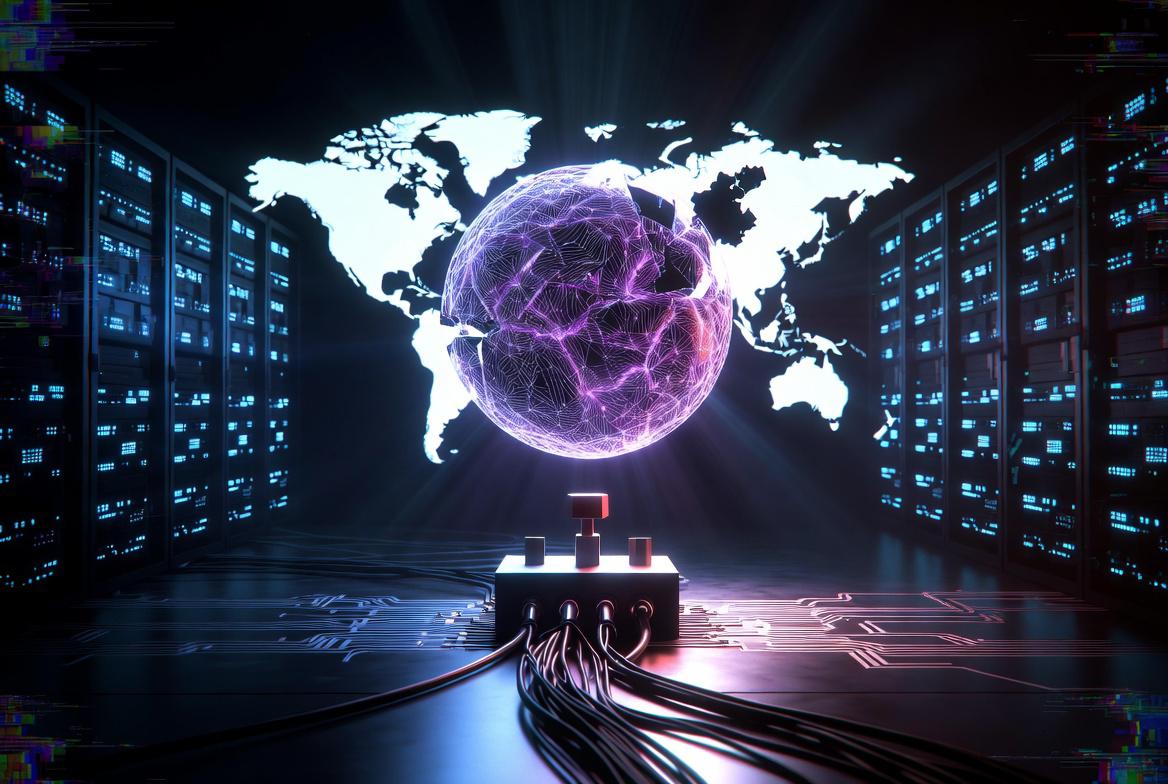
Being the best is not the same as being unstoppable. The most capable model on earth went dark worldwide on the strength of a single government signature — and three weeks on, it is still dark. If your operating model now depends on frontier AI, that sentence should change how you think about resilience.
What Actually Happened
On 9 June 2026, Anthropic released Claude Fable 5 and Claude Mythos 5 — its most capable models to date. Three days later, on 12 June, the US Commerce Department ordered Anthropic to suspend access, citing a claimed jailbreak that could turn the models into unrestricted cyber tools. The order was issued under the Export Administration Regulations and targeted access by user nationality.
Anthropic could not reliably tell foreign users from domestic ones in real time across every API call. So to comply, it did the only thing it could: it switched both models off for everyone, everywhere. As of late June, they remain suspended, with restoration “under negotiation.” (Forbes has the timeline.)
This is the first time a government has compelled an AI company to revoke access to a deployed, commercial model based on who the user is. Not a chip embargo. Not a training restriction. A retroactive kill switch on a live product. (Background here.)
Why a CFO Should Care About a Model Most People Never Used
Strip away the geopolitics and you are left with a cold operational fact: a critical third-party dependency was withdrawn, globally, with effectively no notice, by a party that is not your vendor and not your regulator.
We have a word for that on the risk register. It is concentration risk — and we usually apply it to a single supplier, a single bank, a single data centre. The Fable 5 episode says the quiet part out loud: frontier AI is now a concentrated dependency sitting upstream of a growing share of finance, operations and decision-support workflows, and its availability is subject to forces entirely outside the contract you signed.
If you have quietly let an external model creep into reconciliations, forecasting, customer service, coding, or board-pack drafting, you have inherited a continuity exposure you almost certainly have not priced. The SLA does not cover “switched off by a foreign government.”
The Sovereignty Scramble Is Already On
The reaction abroad was immediate. European and Canadian leaders raised the alarm over the precedent, and the episode has hardened the case for sovereign AI — domestically controlled models and infrastructure that cannot be remotely disabled by another state. The Cloud Security Alliance has gone as far as publishing enterprise governance guidance on AI model export controls, which tells you this has moved from think-tank chatter to board-paper material.
It is also fuel for the decentralised-AI thesis. Networks like Bittensor exist precisely to remove the single point of control — no central company to serve an order to, no switch for a single authority to flip. Whatever you make of the token economics, the architectural argument just got a real-world stress test, and it passed where the centralised model failed.
The Cypherpunk Footnote
There is history here. In the 1990s, the US classified strong encryption as a munition and prosecuted Phil Zimmermann for releasing PGP to the world. The state’s instinct — that powerful general-purpose technology must be controllable, and access gated by nationality — is not new. What is new is that this time the technology is intelligence itself, and the gate can be closed remotely, after deployment, in an afternoon.
The lesson the cypherpunks drew then still applies: capability you do not control is capability you can lose. Owning your tools — running what you can locally, keeping a credible fallback, refusing to build a single load-bearing dependency on something you cannot switch back on yourself — is not paranoia. It is just good engineering, and good treasury.
What I’d Actually Do About It
- Map your AI dependencies. Where does an external frontier model sit in a process you cannot afford to lose for a week? You may be surprised how far it has spread without a decision ever being taken.
- Demand a fallback, not just an SLA. For anything load-bearing, insist on a second model — ideally a different provider, ideally one that can run on infrastructure you control. Multi-model is the new multi-cloud.
- Treat “availability risk” as distinct from “performance risk.” The best model is worthless if it is unreachable. Resilience now means a good-enough model you can always reach, not the best model you sometimes can.
- Watch the sovereignty trend as an investor. Sovereign-AI infrastructure and credible decentralised alternatives are about to attract serious capital. For the PE-minded, that is a thesis worth forming a view on early.
Frontier AI is extraordinary. But the Fable 5 kill switch is a reminder that “extraordinary” and “yours” are not the same thing. Build accordingly.
Leave a Reply